
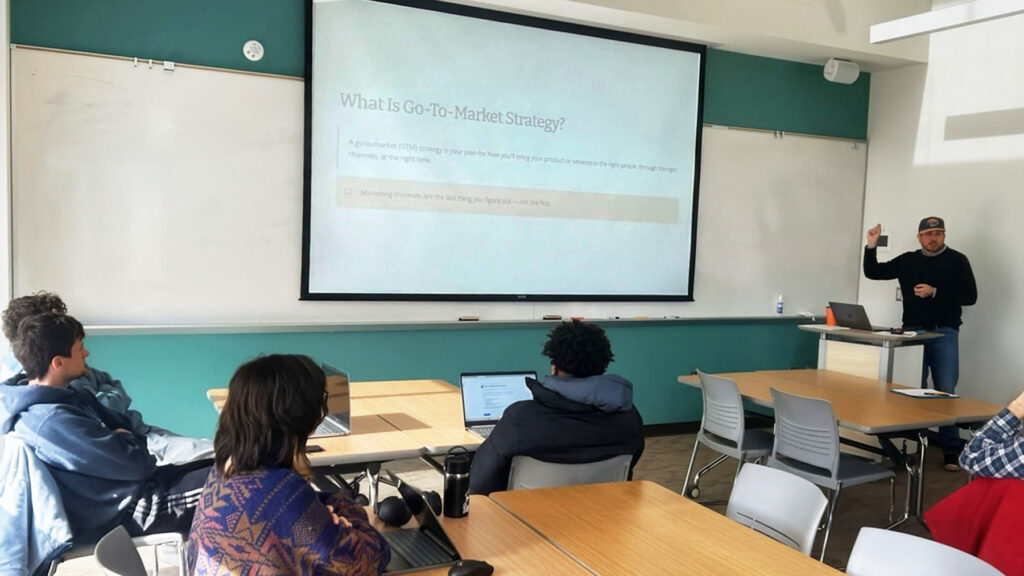
How the EIR Program at Warren Wilson College Turns Student Ideas into Real Ventures
Hatch Innovation Hub’s Entrepreneur-in-Residence (EIR) program has been in action across several campuses in Western North Carolina, connecting students directly with experienced founders who bring real-world insight into early-stage venture development. At Warren Wilson College, that impact is clearly taking shape.
This story highlights what happens when mentorship, structure, and student initiative align.
A Student-Led Venture Gains Momentum
Roselin (Rose) Nhira is a sophomore with a big idea and the courage to build it.
Her concept, uSwap, is a skills-and-services swapping platform designed specifically for college students. The idea is simple but powerful. Students often need help, tutoring, design work, resume editing, or event support, but they may not have cash. What they do have are skills.
uSwap allows students to exchange value instead of money.
With mentorship from Entrepreneur-in-Residence Brock Busby, Rose refined her concept, clarified her value proposition, and began developing the structure needed to bring the platform to life.
That support translated into momentum. Rose secured an $11,000-dollar grant and was accepted into the ACA pitch competition, where she produced a six-page proposal and a three-minute pitch video.
That is mentorship in action.
What an EIR Actually Does
The depth of the EIR relationship is something we want to highlight, because much of this work happens behind the scenes and is only fully understood when you are on campus, seeing the transformation unfold in real time with these students.
Behind the scenes, one of the many students Brock Busby has worked closely with is Rose.
Together, they clarified:
- Her vision and long-term direction
- Her role as product owner
- Her minimum-viable-product strategy
- The key requirements needed to gain traction
One of the most important lessons he emphasized was focus.
Rather than chasing every exciting possibility, Rose learned to prioritize high-return activities, launch a minimum viable product first, and use her pitch deck as a guiding document. The deck became more than a presentation tool. It became a strategic anchor for decision-making.
That kind of discipline is especially powerful for first-time founders.
Why Early-Stage Mentorship Changes the Game
Working with student entrepreneurs offers a unique advantage.
They are early in their journey. They are open to structure. They are willing to test, iterate, and refine. And when they are guided to focus on revenue-generating activities instead of distractions, the impact compounds quickly.
Brock regularly emphasizes sustainable business-model thinking. For a platform like uSwap, that includes asking important operational questions:
What are the hidden costs for a college adopting this platform?
Who maintains servers and platform updates?
What ongoing operational support is required?
Those questions move an idea from interesting to investable.
The Power of Structure and Strategy
One consistent theme in the EIR program is structure.
Entrepreneurs are encouraged to:
- Clarify vision and mission
- Define their value proposition
- Build a focused pitch deck
- Launch a minimum viable product
- Seek funding strategically
Tools like AI can help draft materials, but a disciplined strategy is what turns drafts into direction.
The EIR program provides that discipline in a supportive, real-world environment.
Expanding Access and Strengthening Infrastructure
As the program grows, conversations are underway about strengthening operational systems to better serve both mentors and mentees.
Ideas include:
- Streamlining mentor-booking systems into a unified experience
- Creating a dedicated Slack channel for mentor collaboration
- Developing a webpage that clearly connects mentees to mentors
- Increasing visibility for rural entrepreneurs who may not know these resources exist
The goal is simple. Make access easier. Make mentorship clearer. Make entrepreneurship feel possible.
Faculty Leadership Makes the Difference
Faculty leadership has been instrumental in promoting the program. Advisors like Wendy Seligman have played a critical role in connecting students to the EIR opportunity and encouraging them to step forward with their ideas.
When institutional support meets hands-on mentorship, students gain the confidence to move.
Looking Ahead
The EIR program across campuses in Western North Carolina, including Warren Wilson College, is not simply helping students complete assignments. It is helping them build real ventures.
It is fostering a culture where ideas are tested, refined, and positioned for funding.
It demonstrates that when experienced founders sit across the table from emerging entrepreneurs, meaningful momentum follows.
Rose’s progress with uSwap is one example. It reflects what becomes possible when access, structure, and belief align around a student ready to build.
As the EIR program continues to expand across Western North Carolina, the opportunity is clear. When campuses invest in structured mentorship and entrepreneurial support, they are not just supporting students. They are strengthening the regional innovation ecosystem.
Structured mentorship. Real accountability. Real traction.
The EIR program, working alongside committed faculty partners, creates the conditions to inspire and support students who are building the future while still in college.